
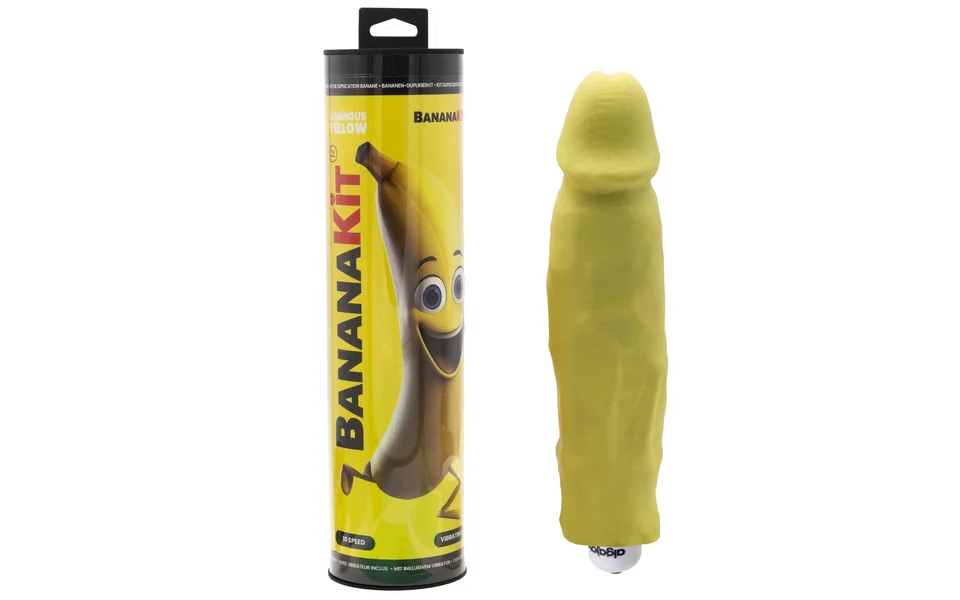
When suggesting an intimate gift, share the idea before assuming your partner will take part. You can explain what interests you, ask whether the idea appeals to them and leave room for an answer different from your own. A gift can remain a suggestion, even when you feel excited about it.
Inside BananaKit: this article also discusses our own product.
Should an intimate gift be a surprise or a shared choice?
If the gift involves someone’s body or participation, starting with a conversation helps clarify what you are choosing. Once you have agreed on the idea, a note or the moment of giving can still hold a surprise. Curiosity does not depend on having already bought the package.
Here is an example written by our editorial team: “I saw a kit for making a silicone replica of a penis. I’m curious about turning it into a personal gift. Would you like to look at how it works together, without deciding straight away?”. The question invites someone to learn about the object; it does not ask them to promise to use it.
What is BananaKit, and what does it involve?
BananaKit is a penis cloning kit for making a silicone replica. The experience therefore involves the person whose body will be cast. It means more than choosing a finished object from a catalogue.
The official tutorial describes two stages: first, an alginate mould is made; then silicone is prepared and poured into the mould to create the replica. Before starting, read the complete instructions and contact support with any questions. This description explains the proposal; it does not replace the instructions for use.
The BananaKit catalogue lists alginate, silicone, a moulding tube, a vibrator and instructions in the complete kit. Material refills are also available. A refill is not the same as a complete kit, a useful distinction when looking at the product together for the first time.
Which questions help you decide together?
You can start with simple questions: “Does the idea of making a cast interest you?”, “Would you like to read the process before deciding?”, or “Would you enjoy taking part in the preparation, or were you imagining a different gift?”. The answers can change the proposal, including deciding not to go ahead.
As RAINN explains, agreement to one activity does not automatically extend to others. Looking at the kit together is not permission to make a cast. Making one does not create a commitment about how it will be used afterwards.
How can you discuss privacy beforehand?
You can make preferences concrete without assuming they are identical. “I’d rather we didn’t take photos”, “Where would we like to keep it?”, or “I’d prefer this to stay between us” are editorial examples for opening the conversation. A personal gift does not need to become social media content.
If you both like the idea, the next step can be reading the kit description together. If it does not appeal, you can accept the answer without trying to preserve the surprise at all costs. Learning a little more about your partner’s preferences is already a worthwhile outcome of the conversation.
Sources
Educational content: it does not provide individual diagnoses or clinical advice.
← Back to the blog